
The debate over Britain’s nuclear deterrent has intensified following comments from Ed Davey, who recently argued that the United Kingdom should consider building its own nuclear missiles rather than relying on the United States. His remarks have sparked a wider discussion about national security, defense independence, and the future of the UK’s nuclear program in an increasingly unstable global environment.
For decades, Britain’s nuclear deterrent has been deeply intertwined with American technology and cooperation.The UK’s nuclear warheads are domestically produced, but the Trident missile system—which carries those warheads—is leased from the United States. Davey’s comments suggest that this arrangement could leave Britain vulnerable if geopolitical alliances shift.
As tensions rise globally and security concerns grow across Europe, the question is becoming more urgent: Should the UK develop its own nuclear missile system to ensure complete strategic independence?
This article explores Davey’s proposal, the current structure of the uk news24x7’s nuclear deterrent, the potential costs and benefits of developing domestic missiles, and what it could mean for Britain’s role in global security.
The Current UK Nuclear Deterrent System
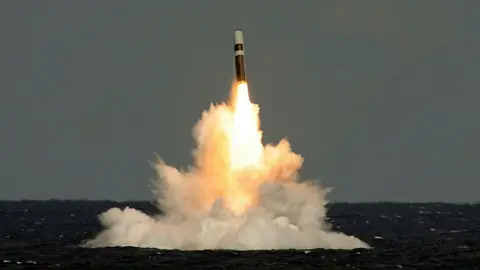


Britain’s nuclear deterrent is centered on the Trident nuclear programme, which has been the backbone of UK strategic defense since the 1990s.
Under this system, the Royal Navy operates a fleet of Vanguard-class submarine vessels capable of carrying nuclear missiles.These submarines patrol the oceans at all times in what is known as continuous at-sea deterrence (CASD).
However, the missiles themselves are not British-made.
The UK currently leases Trident II D5 missile systems from the United States Navy. These missiles are stored and maintained at a joint facility in the United States before being deployed on British submarines.
This arrangement has allowed Britain to maintain a credible nuclear deterrent without the immense costs associated with developing its own missile technology.But critics argue it also creates dependency.
Ed Davey’s Warning About Strategic Dependence


According to Ed Davey, the UK must reassess its reliance on the United States for such a critical part of its national defense.
Davey suggested that Britain should explore developing its own nuclear-capable missile systems to ensure full strategic autonomy.
His argument centers on several key concerns:
1. Changing Global Alliances
Although the UK and the United States maintain one of the closest military partnerships in the world, political alliances can shift over time.
Davey warned that Britain cannot assume the US will always remain aligned with UK strategic interests.
2. Strategic Independence
Many defense analysts argue that a fully independent nuclear deterrent requires control over every element of the system—from warhead production to missile delivery.
Currently, the UK controls its warheads but relies on American missiles.
3. Growing Geopolitical Tensions
Rising tensions with countries such as Russia, China, and Iran have forced Western governments to reconsider defense readiness.
Davey believes Britain should be prepared for a future where alliances cannot be taken for granted.
The History of Britain’s Nuclear Weapons Program



The UK became the world’s third nuclear power in 1952, following the United States and the Soviet Union.
